Call us now:
86-22-8834 5196
LIFTCHEM-UV Curing Raw Materials, Pharmaceutical Intermediates
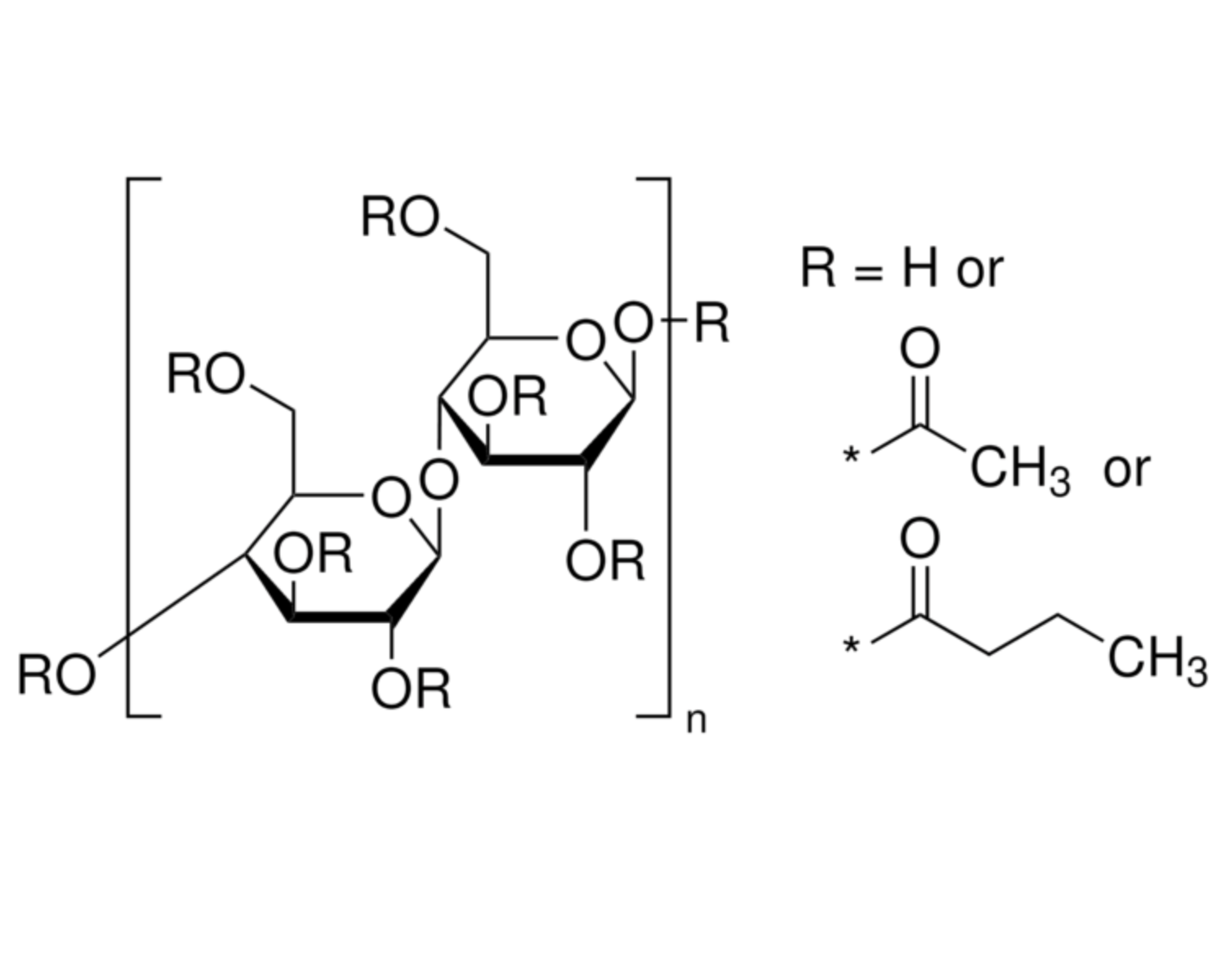
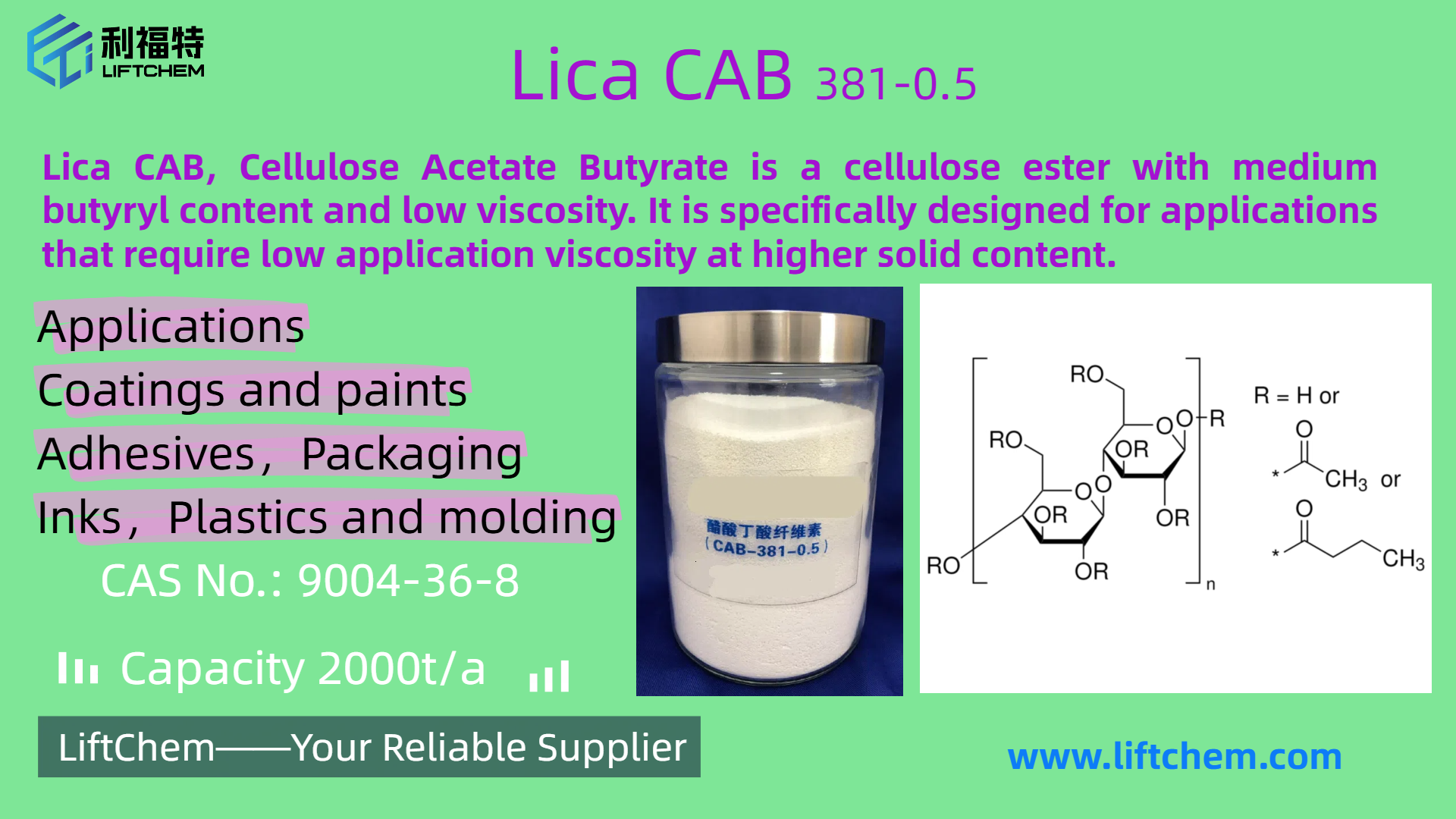
Lica CAB, Cellulose Acetate Butyrate is a cellulose ester with medium butyryl content and low viscosity. It is specifically designed for applications that require low application viscosity at higher solid content. It is soluble in a variety of solvents and compatible with many other resins.
Lica CAB
Chemical Name: Cellulose Acetate Butyrate
Formula: C4H8O2·xC2H4O2·x
Molecular Weight: 318.2
CAS No.: 9004-36-8
Lica CAB is a tough, thermoplastic, bio-based polymer (a mixed cellulose ester) derived from cellulose, known for its excellent weathering resistance, flexibility, and compatibility with many resins, making it a popular binder/additive in coatings (paints, lacquers) for wood, metal, and plastics, as well as for durable tool handles, and formerly, photography lenses, offering a softer film than plain acetate and good UV resistance.
Composition: A cellulose ester with both acetate and butyrate groups, influencing its properties.
Properties: Tough, clear films, good solubility, UV resistant, low moisture absorption, and flexible.
Source: Made from cellulose, a natural, renewable resource, giving it a bio-content.
Applications
Coatings and paints
It is often used as a film-former in coatings, especially in automotive and wood finishes, where its durability, clarity, and resistance to UV are valued
Inks
It serves as a binder in printing inks, enhancing flexibility and adhesion
Adhesives
It is a component in adhesive formulations, offering good bonding strength and durability.
Plastics and molding
It is used in injection molding and extrusion processes for making durable plastic products like eyewear frames and tool handles or toys and sporting goods.
Packaging
Due to its aesthetic qualities and the ability to create smooth and glossy surfaces, it can be used for packaging films and composites.
Specialty products
It is also used in musical instrument parts, pens, durable consumer goods, and cosmetics e.g. skin care and nail polish.